Monday, October 6, 2025

There is a new Noahide cruise ship attraction in San Francisco


SIGN THE PETITION 


There is a new Noahide cruise ship attraction in San Francisco.

 https://jweekly.com/2025/04/07/at-rabbis-79th-birthday-chabad-of-sf-floats-idea-of-cruises-to-educate-the-masses/

At rabbi’s 79th birthday, Chabad of SF floats idea of cruises to educate the masses

by Sue Fishkoff April 7, 2025

Rabbi Yosef Langer, the founder and longtime head of Chabad of SF, celebrated his 79th birthday on Sunday, taking the occasion to promote a new vehicle for public outreach that he hopes will become part of his legacy: the Noah’s Ark Project.

The party was held aboard a boat — not the one he plans on renting for the project, but the Historic Klamath, which is moored permanently at Pier 9 in downtown San Francisco. About 75 people celebrated with Langer and heard how his plans for Noah’s Ark have evolved since they first surfaced in 2020 during the early months of the Covid-19 pandemic.

Five years back, Langer told J. he hoped to buy a 75-foot commercial yacht and use it for all sorts of Jewish events, including teen excursions, b’nai mitzvahs, Havdalah cruises and kosher dinners on the water. He had the boat picked out and wanted to raise $500,000 to purchase it.

Five years later, plans have been downsized. Now his goal is to rent that same yacht four times a year, at an annual cost of about $55,000, and use it to “spread the universal laws of morality,” or the so-called Noahide laws. Those are the seven mitzvot, or commandments, that the Talmud says were given by God after the Flood to all people, not just Jews. They cover basic concepts of ethical behavior: do establish laws and don’t curse God, worship idols, commit adultery, murder, rob or eat flesh torn from a living animal.

Those four annual boat trips will involve text study, specifically the Noahide laws, as well as the usual trappings of a party — music, refreshments and socializing.

A major difference between the original concept and the present plan is that now the events will target non-Jews as well as Jews.

“Chabad doesn’t focus on outreach to non-Jews, but we do have the seven mitzvos to tell them about,” said Evan Weissman, who works as an assistant to both Yosef Langer and his son, Rabbi Moshe Langer, who manages operations for Chabad of SF, serves as CEO of its SoMa shul and runs its Pacific Heights branch.

Sunday’s party served as a launch for the new fundraising campaign. The first of this year’s four official events will be scheduled when sufficient funds have been raised.

One of those who took to the podium to praise the project was Richard Sinkoff, former director of environmental programs and planning at the Port of Oakland and a longtime Chabad supporter who has been on the project’s advisory team since the beginning. 

“This will bring a spiritual message in a tangible way,” he said, referring to the boat trips, which he believes will help reconnect Bay Area folks to the San Francisco Bay. “Even when you’ve lost your connection, you can always establish it again.”

Added Sinkoff, “This is testament to a man who has done so much to reconnect all of us to our Judaism.”

The party was also used to promote the work of Unite the World, a nonprofit that according to its website has distributed more than a million small, yellow, plastic tzedakah boxes shaped like arks across the world to encourage people to give charity and learn about the Noahide laws.

The “arks” stand for “acts of random kindness,” Unite the World’s CEO, Rabbi Yossi Schulman, said at the party over Zoom from Pennsylvania.

“Every single day, put a coin or a bill in it, then say a kind word to someone, or just smile at them,” he told the crowd. “When you start your day with these acts of kindness, you begin to change the world around you.”


SEE ALSO:

https://collive.com/s-francisco-shliach-marks-birthday-with-noahide-themed-bay-cruise/

Thursday, October 2, 2025

USA Secretary of Education is encouraged in the Noahide Laws by Chabad

  See Table Of Contents (Here)


SIGN THE PETITION 


In a visit to Chabad, USA Secretary of Education Linda McMahon is encouraged in the Noahide Laws

https://collive.com/us-secretary-of-education-visits-lec-miami/

US Secretary of Education Visits LEC Miami
March 19, 2025 – 19 Adar 5785

US Secretary of Education Linda McMahon paid a momentous visit to Lubavitch Educational Center in Miami on Tuesday afternoon, just two weeks after taking office, speaking to over 400 of the school’s students and staff members and visiting some of the preschool classrooms. It was her first trip to a Jewish school.

US Secretary of Education Linda McMahon paid a momentous visit to Lubavitch Educational Center in Miami on Tuesday afternoon, just two weeks after taking office, speaking to over 400 of the school’s students and staff members and visiting some of the preschool classrooms. It was her first trip to a Jewish school.

The visit began with a prayer for return of the hostages led by the boys Elementary School principal, Rabbi Moshe Stern, and a welcome by LEC’s Head of School, Rabbi Benzion Korf, who emphasized the importance of teaching morality and ethics rooted in G-d’s guidance. “Education is not just about teaching arithmetic, but about imparting the values that guide how we live together, treating others with respect and understanding that there is a higher power that sees and hears all.”

Secretary McMahon has vowed to empower all parents to choose the appropriate education for their children. “Every student in our country should have access to excellent education, and in order to do that, there has to be freedom of choice,” she said at the event. “Children should not be imprisoned in failing schools.”

She also pointed to the administration’s efforts to crack down on antisemitism on campus, opening investigations into colleges across the country and beginning to defund them. “The president is absolutely and abundantly clear that [antisemitism on campus] will not be tolerated, that no one should have to face fear of being hurt on campus.”

The visit was facilitated by Rabbi Yehuda Kaploun, advisor to President Donald Trump, and who, with Dr. Miriam Adelson, hosted the president’s events on combating antisemitism. “Visiting the South’s largest Jewish day school so early in her tenure is a testament to the core values and ideals the president and secretary share,” Kaploun says. “They believe every child should have the opportunity to study and grow in a safe and secure environment. This administration has shown their understanding of the needs of the broader Jewish community and they have made the wellbeing of Jewish students their priority.”

The girls’ high school was represented by a class of thirty students, with an eloquent message delivered by high school junior Necha Touger. She spoke about the profound impact Jewish education has on its students and how they are inspired to reach out and make a difference in the lives of others. Secretary McMahon shared with the girls her personal journey which included many ups and downs and imparted a lesson on perseverance.

During the event, Secretary McMahon recognized and applauded the children’s fundraising efforts, now totalling over $50,000, toward their annual Passover campaign, to give back to the community and provide for the needy during the holiday. The students also received a letter from President Trump in 2019 lauding their initiative.

The visit comes just weeks before the US marks Education and Sharing Day in April, on the birthday of the Lubavitcher Rebbe, who was a strong advocate for a moral education in the classroom and who pioneered the Moment of Silence in public schools.

During the visit, Rabbi Korf presented Secretary McMahon with the Book of Genesis with traditional commentaries, underscoring the need for an education based on faith and G-dly morals.

“We are grateful for Secretary McMahon’s visit and we wish her much success in restoring the moral compass of our country, the basis of which starts with the Seven Noahide Laws,” says Rabbi Korf. Lubavitch Educational Center is a complete network of boys and girls schools ranging from preschool through high school and mesivta, with over 2,500 students.

Photos by Menachem Williams

Wednesday, October 1, 2025

Time of Israel writes about how spiritually unfulfilling the Noahide lifestyle is

  See Table Of Contents (Here)


Time of Israel writes about how spiritually unfulfilling the Noahide lifestyle is.

https://www.timesofisrael.com/what-do-the-third-temple-movement-and-noahide-laws-have-in-common-a-far-right-vision/

What do the Third Temple movement and Noahide laws have in common? A far-right vision

In her new book ‘Messianic Zionism in the Digital Age,’ Rachel Z. Feldman documents a growing fringe movement to hasten the messiah’s coming – and its incendiary geopolitical implications

By Rich Tenorio Follow

20 September 2025

When Israel’s National Security Minister Itamar Ben Gvir delivered a provocative speech on August 3 calling for not just the destruction of Hamas, but the occupation of the Gaza Strip and the voluntary emigration of Palestinians from the enclave, it wasn’t just what he said that raised eyebrows, but where he said it.

The video, posted on Ben Gvir’s X account on Tisha B’Av, the Jewish day of mourning over the ancient destruction of the First and Second Temples, showed the far-right member of Prime Minister Benjamin Netanyahu’s cabinet standing dressed in a white shirt and dark blazer in front of the Al-Aqsa Mosque in Jerusalem.

The mosque is built on a site venerated by Muslims and Jews alike. Jews know it as the Temple Mount, the site of the two biblical Temples, and where, according to Jewish eschatology, a Third Temple will rise to usher in a messianic era. Muslims call it the Haram al-Sharif, or Noble Sanctuary, and consider it the third-holiest site in Islam, where Muhammad ascended to heaven.

The Temple Mount was captured by Israel in the Six Day War, but in a subsequent deal, control was restored to a Jordanian waqf, or Islamic religious trust.

In a controversial but longstanding arrangement known as the “status quo,” Muslims are allowed by the Waqf to worship at Al-Aqsa; Jews can visit but not pray there.

On Tisha B’Av, Ben Gvir led a group in prayer at the site — an unprecedented act of public worship by a government minister condemned by Jordan as “an unacceptable provocation and a reprehensible escalation.”

While Jewish activists going to the Temple Mount is not a new phenomenon, it’s an increasing one. Many religious nationalists are dismissing geopolitics as well as the traditional Orthodox approach of waiting for the messianic era before setting foot on the holiest of Jewish sites. These activists wish to actively pave the way for the Third Temple by reestablishing a Jewish presence on the Temple Mount.

Outside of Israel, some are using the internet to bring about what they see as another prerequisite for the messianic era: They are helping tens of thousands of non-Jews across the world transition from Christianity to a community called the Children of Noah, Bnei Noah, or Noahides. This community is built on adherence to the Seven Noahide Laws of the Hebrew Bible. It’s debated whether to call Noahidism a religion or not.

Dartmouth College religious studies professor Rachel Z. Feldman documents these developments in a new book, “Messianic Zionism in the Digital Age: Jews, Noahides, and the Third Temple Imaginary.”
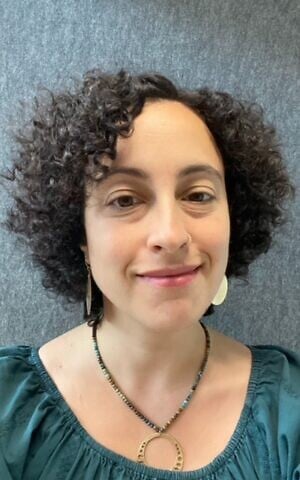
Prof. Rachel Z. Feldman, author of ‘Messianic Zionism in the Digital Age.’ (Courtesy)

“It’s not a book about geopolitics but sight lines on the ground,” Feldman told The Times of Israel. “I tried to enter the daily lives of Temple activists and Noahides, see [things] from their perspective, to understand how their vision of the Third Temple globalized.”

Asked in a follow-up email for comment on Ben Gvir’s visit and prayer on the Temple Mount, she replied: “The status quo has definitely changed. I have watched this play out slowly since I started my research in [2012]. There are Jewish groups praying openly every day now, so what Ben Gvir did is not exceptional in that regard.”

“Regardless,” she added, “I think his act should force us to reflect on how the Temple Mount/Al Aqsa has been used by both Israeli and Palestinian leaders to obtain political goals. The Temple/Al Aqsa is the most potent messianic and political symbol at the heart of the conflict, capable of morally justifying and sacralizing violence.”

A wartime messianic boom

According to the author, Third Temple activism has grown in intensity since the October 7, 2023, Hamas onslaught on Israel and subsequent Israeli war on Hamas in the Gaza Strip. She cites phenomena such as social media memes interweaving the Third Temple and the war, and instances of Israel Defense Forces members spray-painting Third Temple graffiti onto Palestinian homes in Gaza.

“Some Temple activists took a really hard-line militant stance,” she said, “that October 7 was definite proof that Israel should move forward and annex the Temple Mount.”

Feldman wrote the book’s conclusion during the previous conflict between Israel and Hamas in 2021. By that point, she had conducted research in far-flung locations, from Texas to Israel to the Philippines. And she had tracked how Third Temple activism had migrated from the fringe to mainstream Israeli religious nationalism over recent decades.

“We can say that generally, the Orthodox world has a passive messianic approach. You should not physically try to move the messianic era along through practical action,” Feldman said of the mainstream belief that the messiah will only arrive when the Jewish people reach a certain spiritual threshold.

“Where Temple activists diverge,” she said, “goes back to Rabbi [Avraham Isaac] Kook, one of the founding thinkers of religious Zionism: One can take physical acts to manifest the messianic timeline — renew animal sacrifices and the priesthood, bring Jews to the Temple Mount.”

Feldman noted that while Kook did not call for such acts, his present-day followers see them validated by his early 20th-century vision of practical political steps to reestablish a sovereign Jewish nation in the Holy Land.

As for today’s activists’ vision of Israel in the messianic age, she said, it will be “essentially a theocratic state that operates according to Torah law.”

Working from the margins towards the center

One measuring stick of popular acceptance of Temple activism has been the changing location of the Temple Institute, an NGO advocating for a Third Temple.

Founded in 1984 by Rabbi Yisrael Ariel — who was a member of the paratrooper brigade that captured the Temple Mount in the Six Day War — the institute was originally located in a back alley of the Old City of Jerusalem. Today, it occupies a much more prominent space across from the Western Wall. There are other barometers: The formation of a Temple lobby in the Knesset in 2016 and the 50,000 to 60,000 Jews who visit the Temple Mount each year.

As part of her fieldwork, the author went to the Temple Mount with an all-female activist group called Women for the Temple. They were confronted by members of a Palestinian women’s group, the Murabitat, formed to defend the site from Jewish encroachment. The book describes the ensuing scene.

“On the one hand, these [Jewish] activists were going up to have this deep, meaningful, spiritual experience,” Feldman said. “Yet two seconds in, they were surrounded by armed guards and protests from the Muslims.”

The book presents a comprehensive look at the Temple activist movement. Predominantly Ashkenazi and male in leadership, its “foot soldiers” are often female and/or Mizrahim, or Jews of Middle Eastern descent — who have historically faced forms of racism and socioeconomic disadvantages in the nascent Jewish state.

The movement has co-opted the protest language of the left: Activists claim that the Israeli government’s allowing Muslim but not Jewish worship on the Temple Mount is tantamount to apartheid, and they frame their push for Jewish prayer on the site as a civil rights struggle.

“I made it clear I was not an ideological supporter of the Temple movement,” Feldman said. “Some interlocutors tried to convince me. They were not successful.”

Yet, she added, “a sense of respect was established between us. There was a desire on their part not to be seen as crazy, and their internal logic represented, which I took seriously as an anthropologist.”

A Noahide endgame

By that time, Feldman had also found links between Orthodox rabbis in the Temple movement and Noahides across the globe. Rabbis such as the Temple Institute’s Ariel, and Oury Cherki of the Brit Olam World Noahide Center, were reaching out to Noahides — and to Christians interested in becoming Noahides. The Temple Institute found an eager audience in the American Southwest; it was at the institute’s 25th anniversary gala in Dallas in 2012 that Feldman first learned about Noahides from attendees who wore cowboy boots and Stars of David. Meanwhile, Brit Olam created downloadable resources on its website, including a Noahide prayer book and a declaration to uphold the Seven Noahide Laws, which cover issues such as rejection of idolatry, establishing a justice system, and refraining from sexual immorality and theft.

Eventually, Feldman wished to learn about Noahidism from Noahides themselves. She became particularly interested in communities in former Spanish colonies.

“In some places I traveled,” she said, “some rural parts of the Philippines and Mexico, I was the first Jewish person they had ever met in person. They were tuning into Jewish media all day, listening to hours of rabbis on YouTube, maybe even exchanging digital questions with rabbis … But there was no interchange with a Jewish person, in person.”

In the Philippines, Feldman went to a Noahide wedding on the island of Cebu. The bride and groom each referenced the Seven Noahide Laws in their vows. Feldman was a welcome guest, enjoying mangoes, pineapple and coconuts while getting asked by multiple congregation members to bless them.

“Many Noahides in [former] Spanish and Portuguese colonies … share similar life histories,” Feldman said. “They were born into Catholic families. As they grew up, they started questioning the divinity of the church and moved to Protestantism.

“Within Protestantism, they started to explore more and more Hebrew Roots Christianity, which emphasizes the Hebrew Bible. The closer they started to read the Hebrew Bible, the more they got into Judaism — which led them to question the divinity of Jesus.”

For many, this path led not to a Jewish conversion, but to Noahidism — which, Feldman explained, was due to geographical, financial and logistical reasons.

She noted that many would-be converts in the Philippines sought an Orthodox conversion, but faced barriers. For example, an Orthodox community in Manila that welcomes converts is located in an expensive neighborhood, making it hard for villagers from other islands to relocate.

Becoming a Noahide can bring complications of its own.

“After rejecting Jesus, they’re in a kind of no man’s land in terms of religious identity,” Feldman said. “Becoming Noahide gives them a status under Jewish law… The problem for them is that most people are not satisfied with just having a legal status as a religious identity.”

“From an Orthodox rabbinic perspective, Noahidism is a legal status, defining who is a God-fearing and non-idolatrous gentile, not a religion,” she added. “Some [Noahides] are content with that… The majority of people I interviewed in the Philippines and in Latin America are yearning for something more.”

In the book’s conclusion, Feldman contemplates what that “something more” could mean.

“Even as digital channels extend forms of rabbinic authority to new locales,” she writes, “the Noahide faith might eventually upend barriers to Jewish conversion in the Global South as Noahides speak back to rabbinic centers of power and exert their own influence on the Orthodox Jewish world.”

As for the Third Temple, Feldman raises provocative questions in the final pages, inspired by the 18th-century kabbalist, Rabbi Nachman of Breslov.

“What might an alternative political theology of the Third Temple look like?” she asks. “Could ancient Jewish notions of the entire world as a ‘Third Temple’ motivate a radical ecological ethics or a greater concern for global wealth disparities? Maybe the Third Temple is already nascent inside of us, in our untapped abilities to build a truly sustainable and equitable planetary Temple home.”

Crowd of 700 religious leaders, congress persons, and Israeli Knesset leaders learn about the Noahide Laws

 See Table Of Contents (Here)


SIGN THE PETITION 


According to the Chabad website ColLive, 700 religious leaders, congresspersons, and Israeli Knesset members learned about the Noahide Laws at a scheduled event. 

https://collive.com/florida-shliach-teaches-700-non-jewish-leaders-about-noahide-laws/

Florida Shliach Teaches 700 Non-Jewish Leaders about Noahide Laws

September 18, 2025 – 25 Elul 5785

Rabbi Pinchas Taylor, best-selling author and lecturer, delivered an electrifying speech to a large group of 700 mostly non-Jewish leaders. The event was hosted as a display of support for and solidarity with the people in the land of Israel.

Rabbi Pinchas Taylor, best-selling author and lecturer, delivered an electrifying speech to a large group of 700 mostly non-Jewish leaders. The event was hosted as a display of support for and solidarity with the people in the land of Israel.

Speaking before a distinguished audience of many influential pastors, members of the Israeli Knesset, as well as members of the US Congress, Rabbi Taylor succinctly captivated the room, outlining the spiritual significance of the Seven Laws of Noah, and calling upon all people to use them to civilize our chaotic world.

Rabbi Taylor directs the American Faith Coalition, promoting a G-d centered, purpose-driven life for all people.


Tuesday, September 30, 2025

Unofficial Sanhedrin uses Charlie Kirk's death to spread Noahide Laws


SIGN THE PETITION 


The unofficial Sanhedrin has used the Charlie Kirk assassination as an excuse to promote Noahide Law. 

https://israel365news.com/412499/sanhedrin-issues-statement-mourning-charlie-kirks-death/

Sanhedrin Issues Statement Mourning Charlie Kirk’s Death

Adam Eliyahu Berkowitz

September 17, 2025

The nascent Sanhedrin issued a declaration mourning Charlie Kirk’s death, directly connecting the Christian conservative pro-Israel activist’s September 10 killing to broader religious themes related to Israel and global redemption.


The Sanhedrin’s statement, dated “22nd Elul, 5785” in the Jewish calendar, opens with explicit grief: “The Court grieves over the murder of Charles Kirk, who was an extraordinary and exceptional great supporter of the people of Israel.”

The declaration immediately connects Kirk’s death to messianic prophecy, quoting extensively from Isaiah: “The path to repairing the world, stopping murder and bloodshed, and all other great injustices committed in the world is when all nations recognize the choosing of the Holy One in the people of Israel, as the prophet Isaiah said: 

“And many peoples shall go and say: Come, let us go up to the mountain of the Lord, to the house of the God of Jacob, that He may teach us His ways and we may walk in His paths. For out of Zion shall go forth the law, and the word of the Lord from Jerusalem. And they shall beat their swords into plowshares, and their spears into pruning hooks; nation shall not lift up sword against nation, neither shall they learn war anymore.” Isaiah 2:3

The Sanhedrin elevated Kirk to quasi-prophetic status, declaring: “Charles Kirk was among the wise of the nations of the world, who understood reality clearly, who understood the divine election of the people of Israel. On his desk was written: 

“He has told you, O man, what is good; and what does the Lord require of you but to do justice, and to love kindness, and to walk humbly with your God.” Micah 6:8

The Sanhedrin presented a direct theological interpretation of the killing: “In the terrible murder of Charlie Kirk, the fact stood out that those who oppose and hate Israel hold to the path of murder and violence. The path to heal the world from murders and other injustices is through the people of Israel, supporting it and learning from it.”

The declaration includes a global religious mandate: “We call on all nations of the world to walk in his path, to understand that the key to repairing the world is the positive connection with the God of Israel and learning the good ways from His people Israel through observing the seven commandments of the sons of Noah, as the Holy One, blessed be He, gave to the people of Israel at Mount Sinai.”

The court offered extensive praise for Kirk’s abilities: “We bless the Holy One, blessed be He, and thank Him for the many talents He gave to Charlie Kirk: debate ability, charisma, in his appearances he was always ready to conduct substantive and eloquent discourse, showed great ability to influence young people, established several organizations, Israel supporters in the United States, and was the beautiful voice defending the people of Israel against the wave of antisemitism plaguing the world.”

The Sanhedrin included what it presented as direct quotes from Kirk’s campus debates:

“The solution for Gaza is complex, because Gaza residents have shown they are incapable of self-governance. When they were given self-rule they chose Hamas in 2006 that ruled Gaza for years. They turned Gaza into a greenhouse of terror, and they became a nightmare for the Jewish people and for war.”

“The court in The Hague is anti-Israeli and funded by anti-Israeli elements. Everything Israel does is examined by the court in The Hague through lenses that no other country is examined with. Such as the detention camps for Uyghur Muslims in China. And like the concentration camps existing in North Korea.”

“I don’t see a case where Israel went out of its way to harm civilians. I do see cases where Israel went out of its way not to harm civilians, distributed leaflets, and even warned the population before attacks.”

“I find it repugnant, the excessive use of the term ‘genocide’ because it cheapens the real cases of ‘genocide’ that occurred in the last hundred years.”

“If Israel lays down its weapons? What do you think will happen to it?”

“It’s hard for me to identify with Hamas, which on 10/7 murdered 1,200 Israelis, committed a genocidal crime when it directly and intentionally attacked civilian targets, and also took hundreds of civilians captive. Hamas forced Israel to respond harshly, and now comes to play the role of ‘victim.'”

The statement concluded: “The values of the United States of America are closer to those of the state of Israel than to the Palestinians. We pray that pro-Israel leaders in the world will be better preserved and more protected, in the United States and throughout the entire world.”

The document was signed simply: “Secretariat of the Court.”


Tuesday, July 1, 2025

More recognition of the Noahide Laws out of Jamaica - Governor-General again affirms the Noahide Laws on Education and Sharing Day

 See Table Of Contents (Here)

Once again, the Governor-General of Jamaica has affirmed the Noahide Laws for his nation under Education and Sharing Day. 

 https://anash.org/jamaica-proclaims-education-and-sharing-day/

Jamaica Governor-General Adopts Sheva Mitzvos

Tuesday, April 15, 2025

New York Nassau county supreme court learns about Noahide Law

 TABLE OF CONTENTS


SIGN THE PETITION 


 The New York Nassua county supreme court has learned about the Noahide Laws.

https://collive.com/shliach-addresses-nassau-county-supreme-court-at-holocaust-memorial/

Shliach Addresses Nassau County Supreme Court for Holocaust Memorial

January 31, 2025 – 2 Shevat 5785

Rabbi Anchelle Perl, Mineola Chabad leader addressed the Supreme Court of Nassau County on the 80th Anniversary of International Holocaust Remembrance Day.

Rabbi Anchelle Perl, Mineola Chabad leader addressed the Supreme Court of Nassau County on the 80th Anniversary of International Holocaust Remembrance Day.

Rabbi Perl, Director of the Chabad Center of Mineola, was invited to lead the Invocation:

“Almighty G-d, Source of Justice and Compassion, we gather today to honor the memory of the six million Jewish souls and countless others who perished in the Holocaust. We remember not only their suffering but also the moral failures that allowed such evil to take root.

“This courthouse stands as a testament to the rule of law, a stark contrast to the judicial system of Nazi Germany, where courts became instruments of oppression instead of justice. Today, by convening here, we affirm that the judiciary must always serve as a guardian of truth and human dignity.

“The Lubavitcher Rebbe, Rabbi Menachem Mendel Schneerson, often spoke of the universal values found in the Seven Noahide Laws, the fundamental moral code given to all humanity. He taught that these principles of justice, kindness, and respect for life are the foundation of a civilized world. The Holocaust was not only an assault on the Jewish people but on these very values, and its lessons remain urgent today.

“As we witness the rise of antisemitism and hatred in our time, let us commit to action. May today’s gathering inspire us to uphold the sacred responsibility of the courts: to ensure that laws protect rather than persecute, to confront injustice with courage, and to build a world where righteousness prevails over cruelty.

May the memory of the victims strengthen our resolve to stand for truth, justice, and the divine responsibility we share to better humanity.”